Posted on 09-10-2008
Filed Under (Coming Events) by Delucia

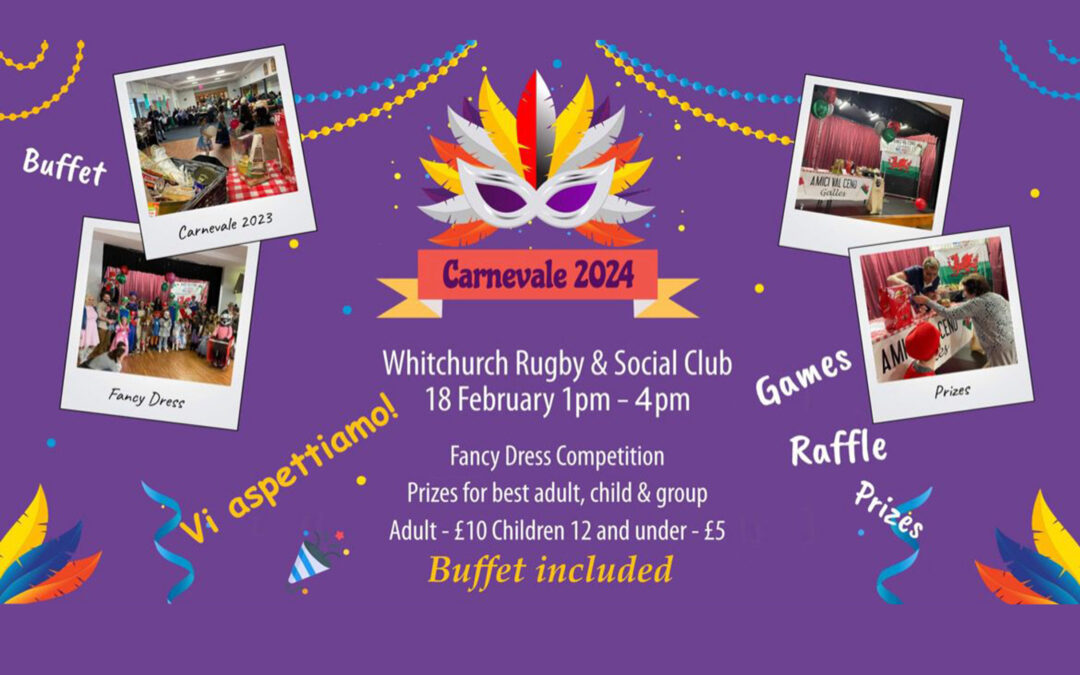
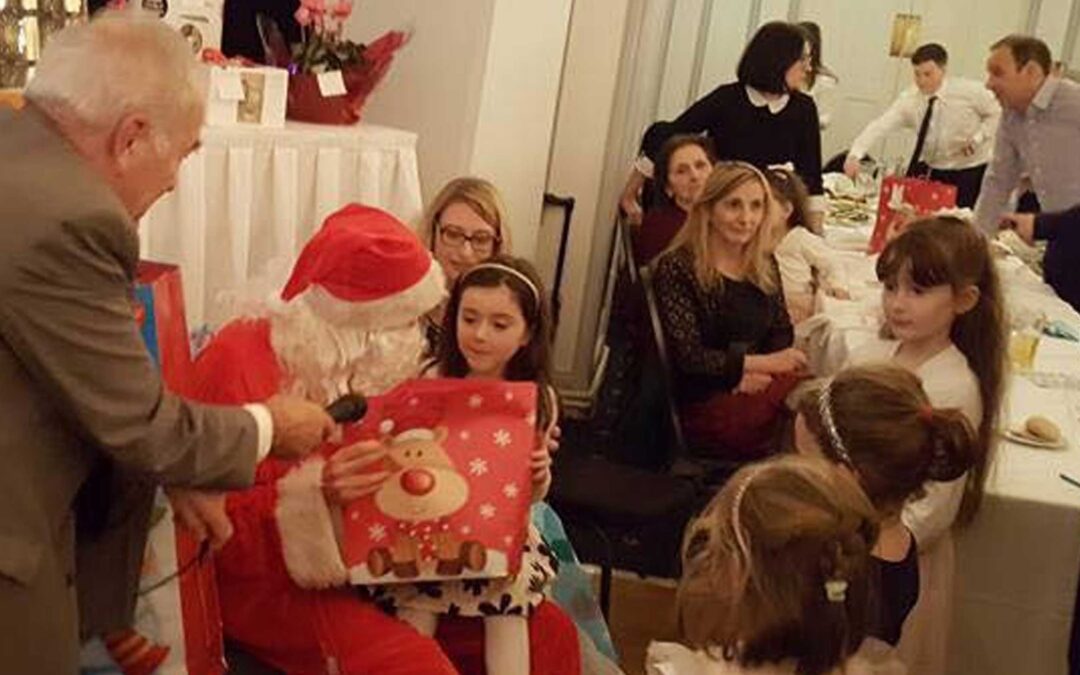
It is that time of year again… the nights are drawing in, the temperature is dropping and the AVC Cena and Dance is fast approaching. We hope to see as many Bardigani there are possible; it is always a fun filled evening for all ages and a chance to catch up with friends.

Up for grabs in this year’s Grand Raffle is a fantastic prize… A white knuckle ride in a Ferrari, three times around The Great Western Racing Circuit, Chippenham. The lucky winner will receive a Diploma and an open voucher worth £65.

Information:
Date: 30th November 2008
Time: 7pm
Location: Maes Manor, Blackwood
Price: £18.00
Tickets are to be paid for in advance, please contact Paul Pelopida, or any other committee member, for more information.

(0) Comments    Read More   
Posted on 09-10-2008
Filed Under (Community, Galleries of Bardi, Jam with Robina) by Delucia

Each Summer the Welsh (and English and American) -Italians take time out of their busy schedules and return to Bardi. With more bars per square inch than San Antonio, Ibiza, festas like Festa del Imigrante or bands like Jam with Robina playing, there is always something to do.

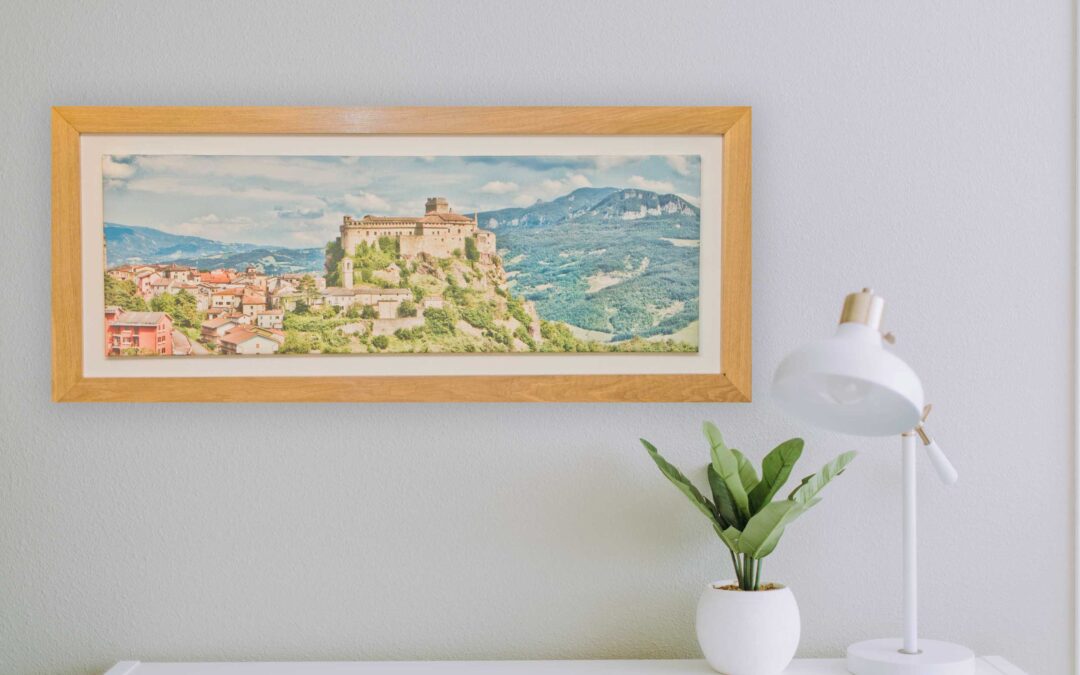
Here are some pictures of Bardi and the surrounding villages taken by Delucia Sidoli during her Summer there.

(0) Comments    Read More   
Posted on 09-10-2008
Filed Under (Arandora Star) by Delucia

Arandora Star Memorabilia gallery pictures prodived by collector John Sidoli.

A South Wales commitee has been formed to come up with an action plan soon to be published, to put a significant memorial to The Arandora Star disaster here in South Wales.

—–

On 10th May, following Dunkirk, Churchill had succeeded Chamberlain as Prime Minister and set up the Home Defence (Security) Executive. This a remit to act on the prediction made by the Chiefs of Staff that Alien refugees were a most dangerous source of subversive activity and recommended that they all be interned.

In consequence a terse note sent to Chief Constables requested them to intern any German and Austrian men and women of Category C where they had grounds for doubting the reliability of an individual. This mean MI5 were able to nominate its own arrests and local forces follow their own initiatives and prejudices.

No one was safe. Maybe it was this blanket internment and the crowded camps which decided the government upon deporting internees to the new world. A policy always favoured by Churchill who would have referred no aliens to remain within the UK. As early as November 1938 government had proposed settling refugees in the Empire.

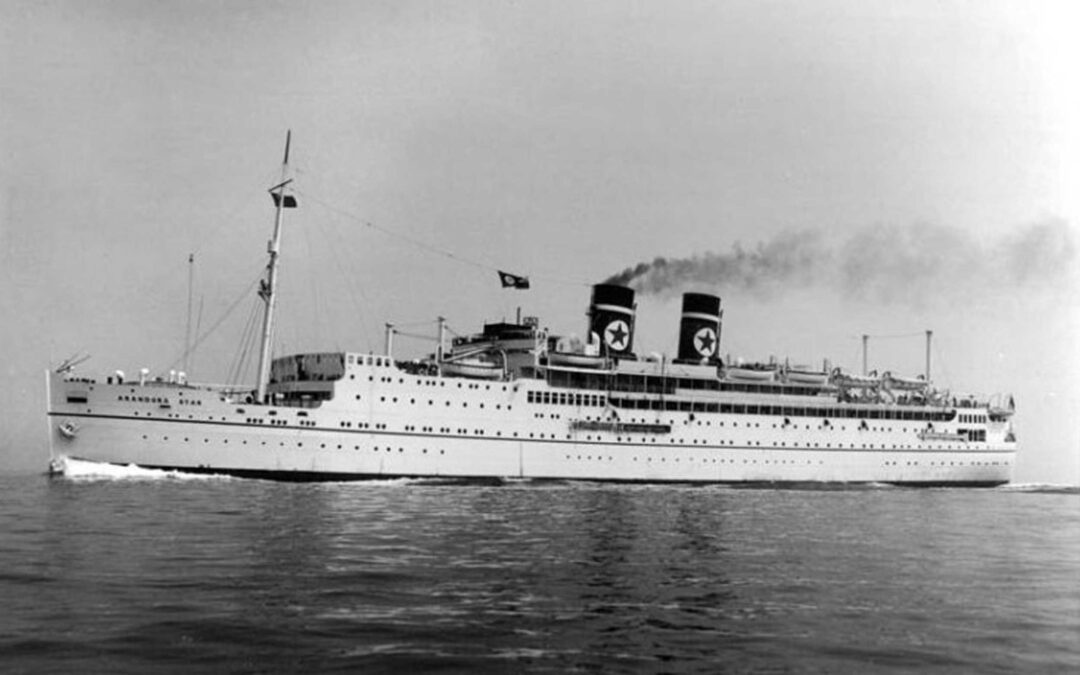
Now, in to the camps, new seeps of the sinking of the Arandora Star on its way to Canada, loaded with 1,700 internees and guards in addition to the normal ship’s crew. 374 British men, 712 Italians, 478 Germans, 1864 souls compressed into a ship built to take 250 passengers and extended to take 200 more. The majority of the Italian expatriates who had lived in Britain most of their lives, the Germans a mixed group of Jews, Nazis and merchant seamen.

The Arandora Star on its second day out from Liverpool, somewhere off the west coast of Ireland, slowly swims into view and frames itself on the crossed hairs of the periscope sights of a German U-boat’s Captain:

“The torpedo struck the Arandora Star fair and square amidships, erupting in a roar of sound and towering wall of white water that cascaded down on the superstructure and upper decks, blasting its way through the unarmoured ship’s side clear into the engine room. Deep inside the shop, transverse watertight bulkheads buckled and split under the impact, and the hundreds of tons of water, rushing in through the great jagged rent torn in the ship’s side, flooded fore and aft with frightening speed as if goaded by some animistic savagery and bent on engulfing and drowning trapped men before they could fight their way clear and up to freedom…”
- The Lonely Sea by Alistair Maclean: Collected Stories published by Wm. Collins 1985 Fontana Paperback 1986.

Not enough like-jackets had been provided, the rafts were lashed immovably to the ship, there had been no life-boat drill and all decks were partitioned by impenetrable barbed wire, cutting off access to the life-boats. The Captain, named Moulton, had protested resolutely against the erection of this wire:

“You are sending men to their deaths, men who have sailed with me for many years. If anything happens to the ship that wire will obstruct passage to the boats and rafts. We shall be drowned like rats and the Arandora Star turned into a floating death-trap.”
- The Lonely Sea

The Captain’s pea is ignored. The government knows better. Prisoners must be surrounded by barbed wire at all times, even when on the ocean! Therefore, 1,000 men drown, including brave Captain Moulton who goes down with his ship together with Second Officer Stanley Ransom and Fourth Officer Ralph Liddle. The three officers standing together on the sinking bridge-wing to await death.

At last the Arandora Star was gone “but almost a thousand of its passengers., guards and crew… still lived, scattered in groups of singly over several square miles of Atlantic… but the sea was bitterly cold. Before long the number of swimmers and those supported only by planks and benches became pitifully fewer and fewer… Their pathetic cries of “Mother!”, repeated over and over again in three or four languages, grew fainter and gradually faded altogether…”
- The Lonely Sea

The evening the first news of the sinking is broadcast on BBC’s nine o’clock news, the number of dead explained away by the claim that the Nazis on board had swept everyone aside in their rush for the lifeboats.

The Daily Express states that “the scramble for the boats was sickening”. All reports give the impression that the Arandora Star had carried only Nazis and Italian Fascists, there was no suggestion that there were refugees on board the liner. And for the population as a whole and for the families of internees, this was the first intimation by the authorities of the deportations.

Most of the 800 survivors picked up out of the ocean by the St Laurent are to spend two nights in a draughty warehouse where for almost 25 hours they stand and sleep barefoot on cold concrete. A local priest in Greenock hearing their plight, brings to them buckets and soap and towels and on each subsequent trip he carried buckets filled with hot water supplied by local housewives. This priest and local clergyman assisted by Salvation Army workers and Red Cross officials. After that, still numbed by shock, the prisoners are taken to Edinburgh where they are shipped aboard the Dunera sailing with internees to Australia.

“The whole camp grieved” says my mother. Each woman mourns for a husband or son, or both, she sees as drowned. A pall settles over the camp, the houses and streets falling into an unnatural science and the women go about their daily tasks heavily and with bowed heads.

A verse of chilling beauty from Shakespeare’s Tempest runs continually through my mother’s head:

Full fathom five thy father lies
Of his bones are coral made
Those are pearls that were his eyes
Nothing of him that doth fade
Into something rich and strange,
Sea-nymphs hourly ring his knell:
Hark! Now I hear them – ding-dong bell.

(0) Comments    Read More   

Cwmbach male choir in Bardi31 maggio - E arrivato, ospite di Bardi, per tre giorni, proveniente da Montidelli dove ha tenuto il suo primo spettacolo nella chiesa di San Donnino Martire nella serata del 30, il famoso CORO MASCHILE DI CWMBACH GALLES che si e esibito, in serata, nella sala germitissima dell’auditorium di San Francesco. Il primo giugno poi hanno cantato all’Eucaristia della Santa Messa e hanno reso omaggio ai caduti del l’Arandora Star nel momento della cerimonia del Ricordo nel nostro cimitero. Nel primo pomeriggio poi si sono trasferti a San Remo dove in serata hanno concluso la loro tournee italiana. Speriamo di averli ancora graditi ospiti in un prossimo avvenire.

Pictures from the event…

(0) Comments    Read More   
Posted on 09-10-2008
Filed Under (Community, Newspaper Features) by Delucia

Luisa\'s Toats to Cafe Customers

Article originally by Dave Edwards (walesonline.co.uk)

Dispite being 91 years old, Italian-born Luisa Carpanini loves nothing more than sitting in her cafe chatting to customers.

Luisa, who was born in Bardi, opened the Cardiff Arms Cafe, Bute Street, with her husband Ernesto in 1947.

Ernesto’s family owned a cafe in Abercynon and after getting married they returned to Italy before coming back to Wales and opening the cafe in the Rhondda.

Luisa said “I have lovely memories of those early years in the cafe. Treorchy was a very busy place then and we used to be open all hours, sometimes until two in the morning.

“Everyone would pop in for a gossip and there used to be lots of courting couples who would come here for a cup of coffee.

“Treorchy has gone a lot quieter now and I miss the old times

“The cafe was also known as Ernie’s after my late husband. Over the years I have served three generations of families while behind the counter.”

The cafe is now run by Luisa’s children Gianmarco, Irene, Francesco and Pietro.

Irene said “I should imagine that Luisa is the oldest surviving Italian in the Rhondda. The cafe has been her life and she loves nothing more than sitting here with a cup of coffe chatting to the customers.”

(0) Comments    Read More   

By Mario Basini

Location: Liverpool, England

Along with thousands of others in Italian families throughout Britain, part of my mother died beneath the cold waters of the Atlantic one grey morning in July 1940. She had arrived in Wales 16 years before, a wild-eyed peasant girl from the hamlet of Pietranera on the road north from Bardi, then in the Province of Piacenza, to Boccolo dei Tassi. She had come to help her brothers and their wives run the family’s series of cafes, fish and chip shops and grocery stores in the upper Rhondda Fawr. By the outbreak of World War II, she was a handsome woman in her early forties, still unmarried and apparently happy to remain a career business woman.

She, her three brothers - a fourth spent most of his time in Italy running the family farm - and their families had found themselves a place in the hearts of their Welsh neighbours. Sixty years after she had moved from the Rhondda to Merthyr Tydfil to start her own family, people in Trehebert and Tynewydd remembered her with affection. But in a few short hours in June, 1940, that relationship and much of the business the Basinis had spent decades creating had been destroyed.

On June 10, Mussolini in a long, ranting speech from the balcony of Rome’s Palazzo Venezia declared war on the UK. In an instant, Britain’s Italian community, perhaps 18,000 strong, became “enemy aliens” to be treated with suspicion, sometimes reviled and their property attacked. Anti-Italian riots broke out in cities including Swansea, Cardiff and Newport and in parts of the Rhondda.

At dawn the next morning the waves of arrests of Italian males destined for internment began. Four thousand two hundred were taken, 300 of whom were British citizens. Among those who were still Italian were my father, then a widower in Merthyr Tydfil struggling to bring up three young children, and two of my mother’s brothers. The eldest, my uncle Giuseppe, Jack, and my father, Marco - another Basini - were lucky. They were interned for a few brief months on the Isle of Man before the authorities realised the absurdity of their decision and sent them home. My mother’s youngest brother, her beloved Bartolomeo, Bert, had no such luck. Aged 31 and startlingly handsome with huge brown eyes and a winning smile, he had married gentle, gracious Anna, from the village of Grezzo, two miles down the road from Pietranera. Their twins, Johnny and Mary, had been born the previous November. Caught up in a process that even British politicians and civil servants at the time labelled unjust and “chaotic”, he found himself among 1500 Italians destined for interment camps in Canada. The list was supposed to contain “the desperate characters” representing a particular danger to Britain.

The selection process was hopelessly bungled by the British security service, MI5. Its criterion for determining whether an Italian represented a significant risk to Britain was membership of the “fascio”, a series of clubs set up around the country by Mussolini’s government. But for many, anxious to protect their families and property back home in Italy, membership of the fascio was obligatory. In most cases membership was merely an expression of a patriotism and pride in Italian culture. While convinced fascists remained at home unmolested, famous anti-fascists were earmarked for deportation. When the authorities arrived at their camps to pick them up, many of those not chosen swapped places with others on the list in order to remain with brothers, fathers, sons, uncles. Some were victims of mistaken identity. When nowhere near the intended 1500 could be found, people were plucked at random from the camps.

The Arandora Star, a luxury cruise liner converted for war use, sailed from Liverpool for Canada early on July 1, 1940. It carried 478 Germans and Austrians as well as around 250 escort soldiers and 180 crew members. By far the biggest contingent was the estimated 712 Italians, most, like my uncle, entirely innocent café proprietors, waiters, fish and chip shop owners. At around 7am the following day it was sited and sunk by a German submarine, U- 47, 125 miles off the northern Irish coast. One hundred and seventy five Germans and Austrians died, 58 crew and 91 soldiers. The Italians bore the brunt of the tragedy. Around 446 died, more than 60 per cent of those on board. Among them was my uncle Bartolomeo.

For those they left behind it was the beginning of a lifetime’s pain. Overwhelmed by feelings of loss and confusion, their grief was deepened by the British government’s callous indifference. Families were informed of their loved ones’ fate by a perfunctory telegram sent many weeks after the sinking. Their healing was impeded by the fact that for most there could be no funeral and the closure that comes with it. Almost none of the few bodies recovered could be identified. The resounding silence in which the British government shrouded the tragedy continued after the war. The Arandora Star and its victims had, for all intents and purposes, been consigned to oblivion.

For those most intimately affected - wives, sons, daughters, brothers, sisters grandchildren- this lack of recognition meant that they have since lived in a limbo of loss and frustrated emotion. “It is as if we have been wrapped in a thick fog,” explains Mary, Bartolomeo’s daughter, now living in Bridgend. For the rest of her life my mother cried when she remembered her baby brother.

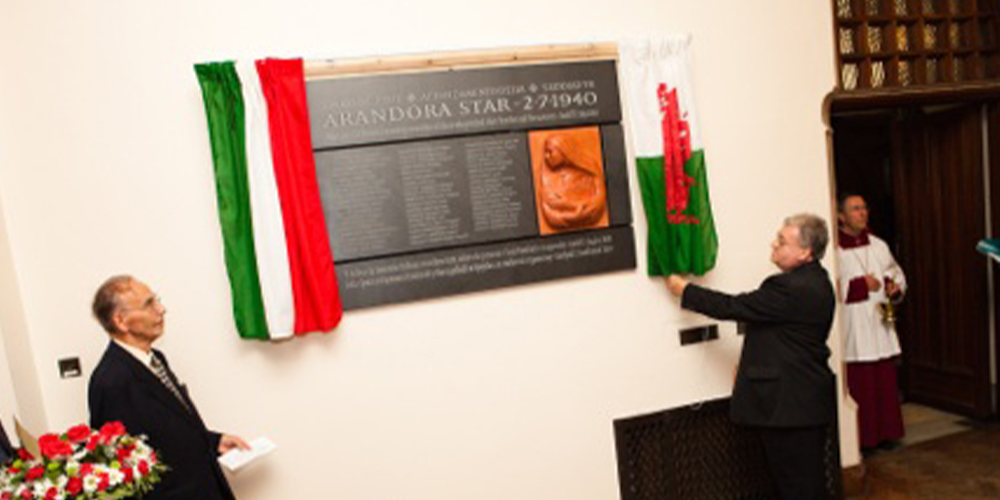
At last, things have begun to change and official recognition of their loss has begun. On June 30 a day of remembrance was held on the Scottish island of Colonsay where some of the bodies and wreckage from the Arandora Star washed up in 1940. A memorial to those who died was unveiled there three years ago. On July 2, the 68th anniversary of the sinking of the Arandora Star, Liverpool, the port from which the ship sailed, hosted a series of events to commemorate its victims. A moving service at Our Lady and St Nicholas, the “sailor’s church” was addressed by the Most Reverend Mario Conti, Archbishop of Glasgow who also unveiled a plaque that will eventually stand on the Pierhead at Liverpool. The Italian ambassador, H.E. Dr Giancarlo Aragona, read from The Book of Wisdom. A representative of the German Embassy read from the First Letter of John. The Lord Mayor of Liverpool, Councillor Steve Rotheram, also attended.

Among the most moving aspects of a memorable service was the contribution of the superb Cwmbach Male Choir who held the congregation spellbound. The presence of the choir at the service and the ceremonies that followed was an indication of the particularly heavy price the Italians of South Wales- especially those from Bardi- paid in the tragedy. Representatives of the provinces of Parma, Piacenza and Lucca, where many of the victims originated, also attended. The service was followed by a buffet lunch and the launch of a new book, by Maria Serena Ballestracci who is rapidly becoming the most important historian of the tragedy.

But the highlight for the relatives was a ceremony on the River Mersey at the spot where many of the internees would have had a final glimpse of the famous Liverpool shoreline as the ship steamed for the open sea. Wreaths in memory of the German, Austrian and British victims, as well as one for the Italians, were laid on the water.

At the dinner in the evening a moving speech from Graziella Feraboli, the daughter of victim, Ettore Feraboli, summed up what the day had meant for the loved ones. “It is as if the door of a tomb had at last been opened and some light let in.”

* Relatives of victims who wish to have the names of their loved ones entered in a Book of Remembrance for those who died at sea can contact the Church of Our Lady and St Nicholas, Liverpool’s Parish Church where the book is kept.

(0) Comments    Read More   
Posted on 13-07-2008
Filed Under (Coming Events, Downloads, Past Events) by Delucia

There is always a festa going on somewhere in the Comune di Bardi throughout the year; you can download a complete calendar here.

(0) Comments    Read More   
Posted on 06-07-2008
Filed Under (Jam with Robina, Past Events) by Delucia

Jam with Robina - Bar Centrale - 11 August 200

Jam with Robina do Bardi (again)

It is that time of year when half of the South Wales valleys empty and head for the sleepy village of Bardi (which is fast becoming the “Monte Carlo” of Italy).

With that in mind Jam with Robina are proud to announce the details of their annual motherland concert!

Date: 11th August 2008
Venue: Bar Centrale, Bardi
Time: 8pm – 8am

They will be playing a collection of their old hits as well as some brand new material and, in true JwR at Centrale style, also the customary collection of sing-along / dance-along covers for a full night of entertainment.

If the past few Centrale performaces are anything to go by this will be a night to remember and is without doubt an event not to be missed. Everyone is welcome, spread the word, be there or be square! Check out past JwR gigs at Centrale’s website: www.caffecentralebardi.it.

As a final note JwR would like to add the following:

When it comes to footwear there is only one thing you should be wearing this summer - Hot Rods baby! With “I Am The Man” containing the immortal line of “Hot Rods on, I am the man”, we fully expect to see each and every person strutting around in their finest Rods, with a prize for the person who makes the best effort. This is YOUR chance to show what you’re packin’ in the boot department so get ‘em on!

This is going to fully rump!

Cheers,

Mark and Ro
Jam With RoBina

(0) Comments    Read More   
Posted on 06-07-2008
Filed Under (Updates) by Delucia

The site was getting rather full so a bit of reogranising was inorder to make it easier to navigate. New features allow you to leave comments where ever you like so, comment away!

Please let me know if you have any problems with the new look site.

(1) Comment    Read More   
Posted on 15-06-2008
Filed Under (Event Reviews, Galleries of Events, Past Events) by Delucia

By Dino Carpanini

Location: Belmont Abbey, Hereford, England.

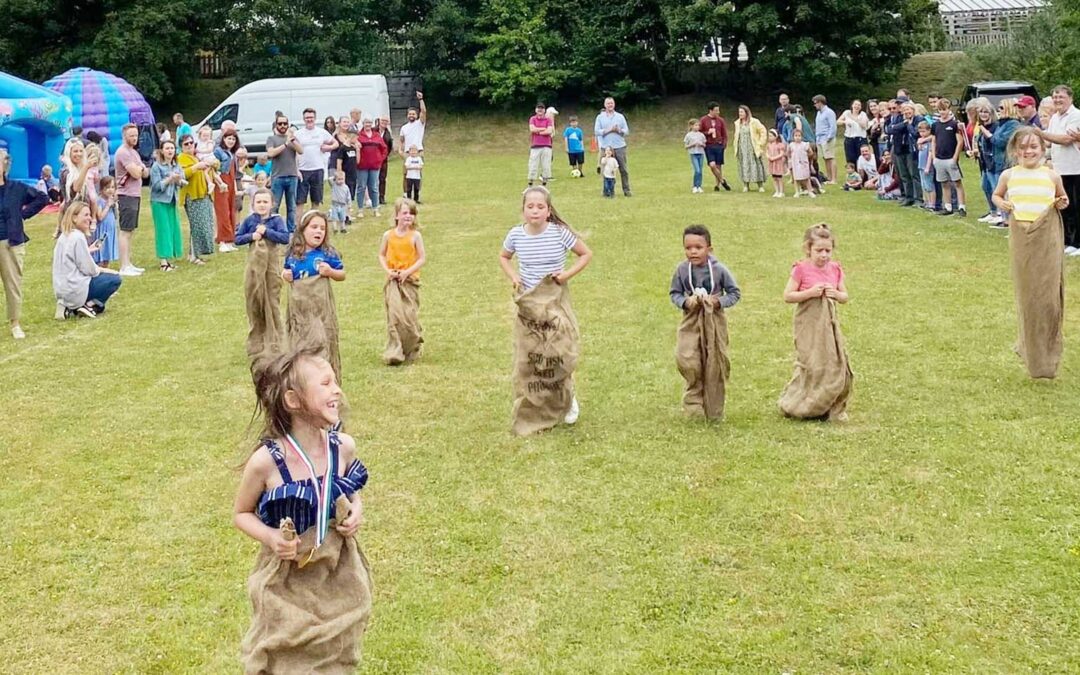
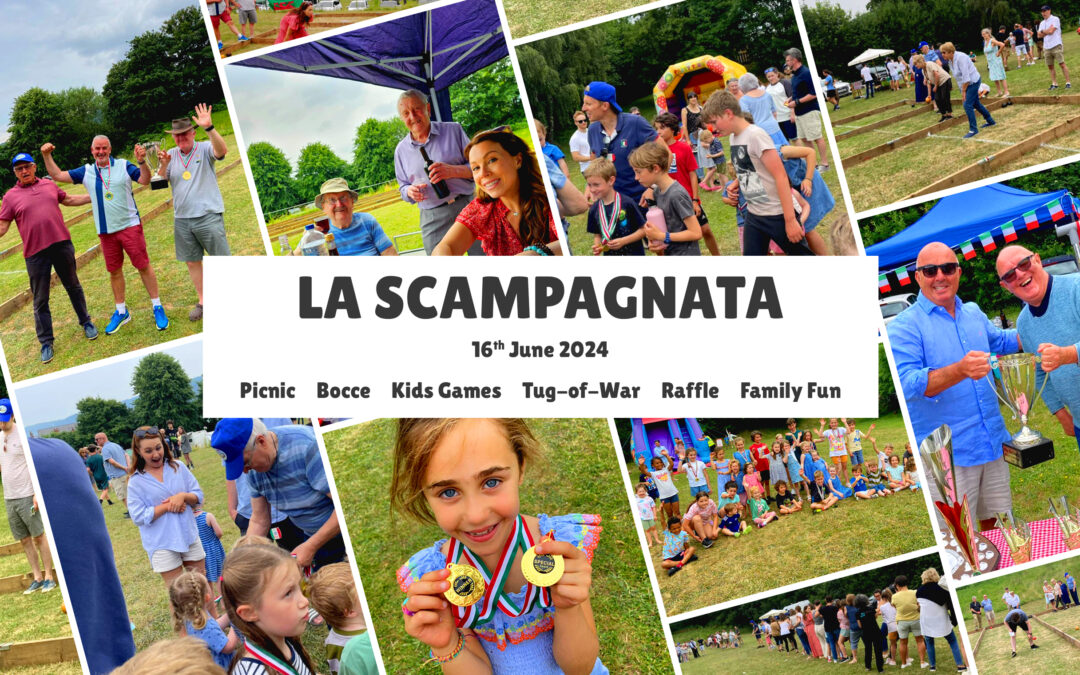
Who said the Sun always shines on the righteous, as a grey morning greeted the early morning arrivals at Abbey of the committee members of the Amici Val Ceno for the annual Scampanagta. They soon got down to setting up the Boce` Rinks and various other tasks needed for the children’s sports. As midday approached the weather took a turn for the better with bright sunshine and a slight breeze.

Mass as usual was celebrated in the Abbey which was followed by the customary family picnic on the field. Gone are the days of just a blanket on the ground and a picnic of salumi con fiasco di vino nostrano ! Now it is all systems go with sun canopies, garden umbrellas and accompanying furniture. Table and chairs with the table displaying Italian fare which would do justice to any Trattoria, especially with the Michelin Star quality of the Torte Dolce!!

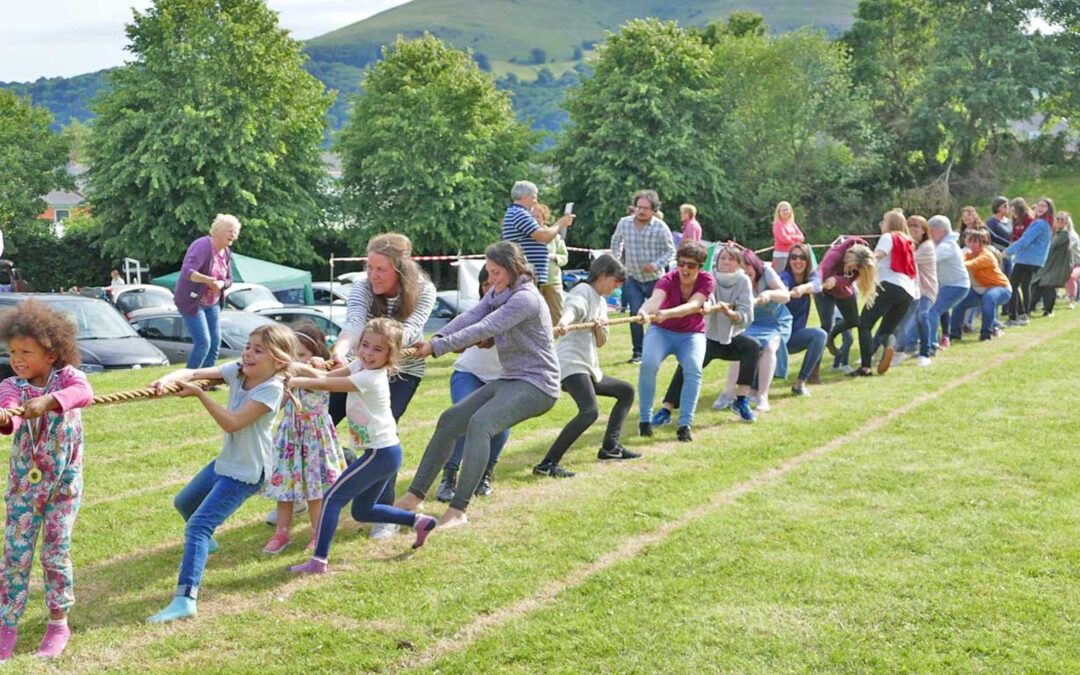
The afternoon entertainment kicked off with the, or should I say bowled off with the ever popular Boce competition 32 teams took part. The children’s sports, a father’s day race and a grand tug of war, with not only children taking part but also parents, aunts and uncles and anyone who could add weight to the event.

With the sunset the Boce` competition reached its conclusion, and once again last year’s winners were victorious, Eileen Peter from Telford in Shropshire in laws of Basini Gazzi. The runners up were John Carpanini and his son.

Thus ended another successful Scampanagta, with many old friendships being renewed and new acquaintances being made. Attendance figure was up on last year, sincere thanks to everyone for they support and generosity in making this such a successful day.

For the friends of the AVC and their families who have not experienced this annual event please try and come along and join us next year to enjoy this really unique social gathering. Any further information regarding this or any other AVC events can be obtained on our website.

A special thanks to Gianluigi Fecci, Paul Guy & Alessandro Strinati for organising the Children’s Sports.

The Pictures

(0) Comments    Read More